
The room with the reactors
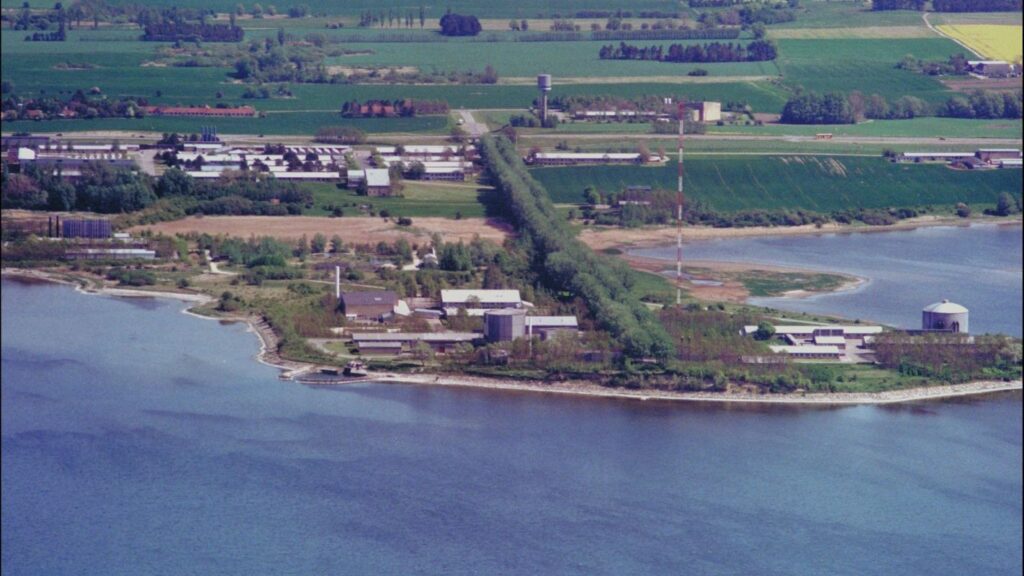
I grew up at Risø.
It was Denmark’s nuclear research centre, on a peninsula north of Roskilde, and my father was director of energy technologies there — responsible for nuclear facilities and nuclear matters in Denmark.
There were three reactors on the site. DR-1, a small teaching reactor, running since 1957. DR-2, five megawatts. DR-3, heavy water, bought from Britain. I was a bright kid who loved science, so I was allowed in among them, and I was there often.
But the drawings I remember best were not of those three. They were schematics for the civilian reactors Denmark was going to build. Not research machines. The real thing. The country’s energy, drawn on paper, waiting.
I was being raised inside a certainty: that if a thing is good enough, and the science is right, it gets built.
29 March 1985
The Folketing voted.
Beslutningsforslag B 103 — om offentlig energiplanlægning uden atomkraft. Public energy planning without nuclear power. Seventy-nine votes for. Sixty-seven against.
Nothing had failed. No reactor had gone wrong. The physics was the same on the 30th of March as it had been on the 28th. A majority of twelve decided that this would not be part of the country’s future, and it wasn’t.
That is the thing I learned before I learned anything else: being right is not enough. The best answer does not win by being the best answer. It wins, or doesn’t, on something else entirely — and if you don’t understand what that something else is, you will spend your life being right and losing.
And then Risø was wound down. The reactors were switched off one by one, the last of them in 2001, and the nuclear facilities were handed over to be taken apart.
Then it happened to me twice more
I became a physicist. At Rutherford Appleton I worked on muon implantation — particle physics. Not for long, but long enough to have done it.
Then I joined Pronosco, in Vedbæk. We had built something genuinely remarkable: a way to read bone density off an ordinary hand X-ray, by measuring the cortical thickness of three metacarpal bones and correcting for porosity through texture analysis. No dedicated scanner. Every clinic in the world already owned the equipment. The clinical literature bears out how good it was.
Nobody bought it.
When we finally asked why, the answer we got was: it looks like shit. Not the science. The look. The feel. The thing we had filed under decoration turned out to be the entire transaction.
Then I became Technology Officer at Coloplast, responsible for radical innovation. We launched ideas years ahead of their time. Inside the institution they suffocated — not because they were wrong, but because an organisation optimised for delivering what it already delivers has no organ for the thing it does not yet do.
A country. A company. A product. Three scales, one lesson, taught three times before I finally understood that it was not bad luck.
The question
Why does innovation fail, even when it should work?
I went at it the way I had been trained to go at a star: you cannot touch it, you cannot visit it, you only have the light that reaches you — and from that you work out the rest. Most of what matters in a new venture is like that. It does not exist yet. You cannot handle it. You can only describe it precisely enough that other people can see it too.
What came out was Simple Systems — a fractal model built on the three things human beings uniquely do: think, make complex tools, and trade value. Set it up correctly and innovation happens on its own; it is a self-organising system with a physical rule underneath it.
Out of Simple Systems came the Qubes: rooms, each with its own dimension and dynamic, each taking an input, running a process, producing an output. Compose them one way and you have stage-gate. Another way, lean. Another, disruption. And because they are rooms, you can build them physically — in a building, or in a tent — and walk teams through them.
That work has been used at CBS, at KEA, at DJØF, at Roskilde Festival, in corporate innovation teams, and in a tool called CoCreationCards that has been running for twenty years.
What an embassy is
There is a country called innovation, where people speak the innovation language.
This is an embassy from that country.
An embassy is a piece of one place standing on the soil of another, operating under its own law. That is exactly what an innovation programme has to be inside an organisation that is not built for it — otherwise it gets absorbed, and absorbed is the same as dead.
So the Innovation Embassy is not a consultancy you hire. It is a setup you can download and run yourself. A company, a university, a city, a region, an incubator, a co-working space — you take the blueprint, you build your own embassy, and you run your own programmes with your own teams.
What is being built
Quritiba — the platform where the rooms become virtual, so a team anywhere can run a real process together.
EDGE — the academy, where the whole system is taught in four levels, from basic to advanced.
SHIFT — three days, in person, where you take one thing of your own all the way through.
Wicked Global Challenge — an event bringing teams and contributors together across borders on problems nobody has solved.
Mighty Capital — a structure that lets ordinary Europeans co-finance and co-own infrastructure at a scale that until now only states could commission.
Thorium Elephants — molten salt reactors. A network, and a blueprint for a reactor good enough to mass-produce.
Back to Risø
In May 2025, forty years after the vote, two of the three parties in the Danish government moved to lift the ban. The parliament did not repeal it. But the government commissioned an analysis of new nuclear technologies — and in January 2026 the framework for that analysis was published.
It asks, among other things, what competencies Denmark would need if such plants were to be built here.
Denmark had those competencies once. They were at Risø. They were dismantled, gradually, after 1985.
I intend to go back — and to continue that work with molten salt reactors.
Not because of nostalgia. Because it is the clearest case I know of the thing I have spent my life on: a good answer that lost for reasons that had nothing to do with whether it was right. I have spent forty years working out how that happens and how to prevent it.
Now there is a chance to prove it on the thing that taught me the lesson.
Rutherford Appleton · ex-Technology Officer, Radical Innovation, Coloplast
Photograph: Forskningscenter RISØ.
An Innovation Embassy is a working setup you install in a building, an organisation, a school or any ground. Where the rules are different. To create something mighty that isn’t killed by the old rules.